That Wild Wild Car in the Midtown Mall!

In 1995 there was a short lived series on TV called, “Legend.” It has been said, if “The Wild, Wild West” and “Maverick” had a child, it would have been “Legend.” The science fiction western, set in 1876, was based on Ernest Pratt and his adventures as “Legend.” 

The car and the stars


This smart, funny, and exciting show only lasted for 11 episodes but there are legions of fans who still love the show, discuss it on social media, watch it on DVD, and wish it would come back.

The DVD

Richard Dean Anderson stars as Ernest Pratt, a gambling, hard-drinking writer who has created a dashing literary hero, Nicodemus Legend. Legend is the main character in a wild series of dime novels set in the dangerous untamed West. Pratt has created Legend in his own image, and all the novels are written in the first person. Because of this, many of his 1870s readers believe that Ernest Pratt is indeed Nicodemus Legend. The irony is that while Pratt himself is something of a lost soul, he has created in Legend a romantic hero who embodies all the optimism and creative spirit of America in the 1870s.

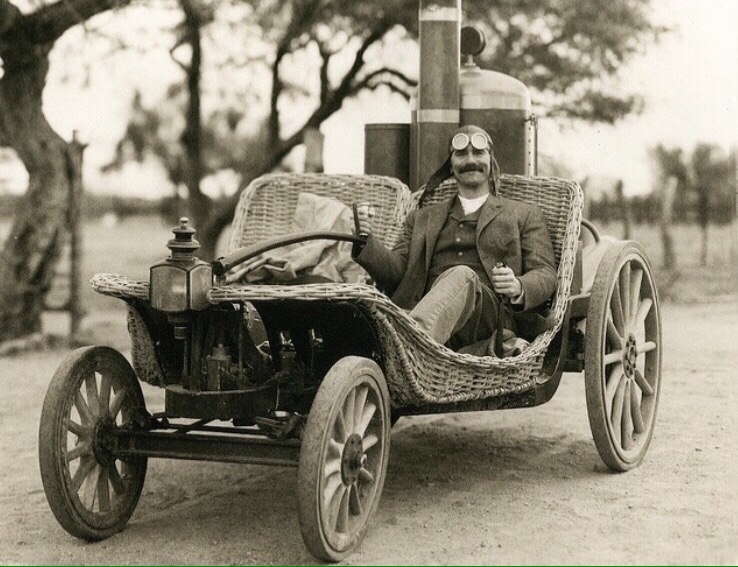
Legend’s vehicle in the Midtown Mall

Legend’s sidekick, Bartok, creates steampunk-like inventions that spring from his visionary mind. All of these inventions are fascinating and many are well ahead of their time. Legend’s audience was treated to such creations as the first All-Terrain Vehicle, which Bartok has named the “Bartok Steam-Powered Town and Country Quadrovelocipede.”

You can’t get more steampunk than this!

 … And guess what? That vehicle, the exact one used in the series is right here in the Midtown Mall! And it’s for sale for only $11,000.  How exciting to be able to see, and have the chance to buy, this beloved piece of television history! It’s made to look like a steam powered vehicle but it’s actually built on a Volkswagen engine. It has an automatic transmission and power brakes. The wooden wheels were made by the Amish in Pennsylvania. And, guess what else? The series was filmed right here in Tucson.

Amish-made wheels

So come on in and check out this great one-of-a-kind automobile. We’ll see you in the mall! 4443 E. Speedway, Tucson, AZ

Carol Fenn 6-2017

~Fiesta Red ~ Radioactive? Orange?

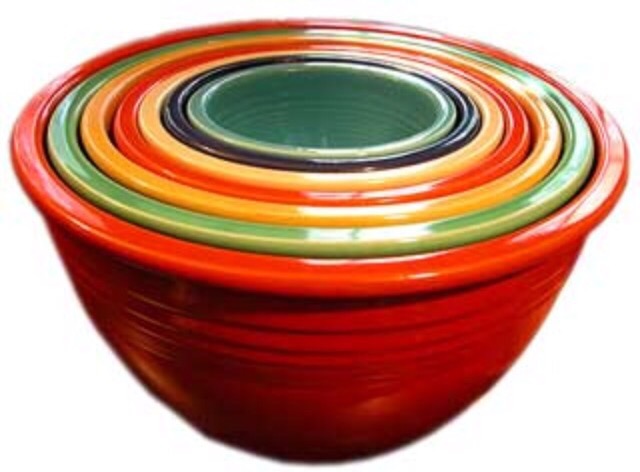
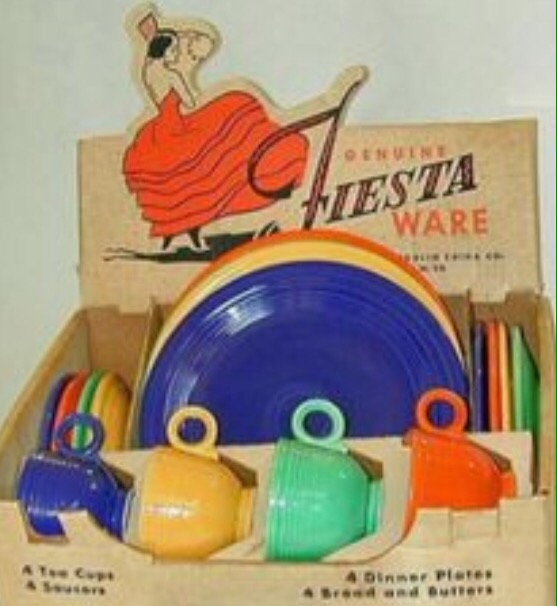
Homer Laughlin’s vintage Fiesta red dinnerware? Is it really radioactive? And is it really red? I’ll answer the second question first. Collectors of early Fiesta know that Fiesta Red (some call it radioactive red) is not really red. Not “fire engine” red or “barn” red. Nope. It’s orange/red. With the emphasis on the orange. Why it was called red instead of orange is something of a mystery.  

Yes, this is red

And this is red!

And this is orange

“Fiesta red” – looks more orange than red, right?


As to it being radioactive, on March 16, 2011, the Homer Laughlin Company posted this statement on its website, in response to a Good Morning America broadcast about radioactivity in the home:

“Included in the Good Morning America report was a product that has not been sold in the market for nearly 40 years, Antique/Vintage Fiesta dinnerware. The anchor narrating the segment passes a radiation measuring tool over several products including the Antique/Vintage Fiesta plate that was produced nearly 70 years ago. The narrator also stated that it was taken off the market because when people heard about the uranium in the glaze, they did not want to buy the product. In fact, The Homer Laughlin China Company stopped manufacturing all Fiestaware in 1972 because of low sales. The product that was used within the segment has been discontinued and has not been available for close to 40 years time. Fiesta today is frequently tested by federally licensed independent laboratories and is lead free, microwave/dishwasher safe, oven proof and made in the USA. . . .
Prior to World War II, it was common practice for manufacturers of ceramic dinnerware to use uranium oxide in color glazes. The Homer Laughlin China Company was no exception, using this material in the original “Fiesta Red” glaze, among others.
In 1943, the U.S. Government stopped all civilian use of uranium oxide because available supplies were needed for the war effort. Homer Laughlin stopped producing the red glaze color at that time and for that reason. Nonetheless, this interruption in production is believed to be the source of the rumor that Fiesta’s red glaze was removed from the market because it was radioactive. In truth, the red glaze emitted far less radiation than some other consumer products. Following the lifting of wartime restrictions, Homer Laughlin again began producing the red glaze in the 1950s, using a depleted grade of uranium oxide.
Homer Laughlin stopped all use of depleted uranium oxide in 1972 and it is not used in Fiesta Dinnerware which is produced today.”


The general recommendation today is to enjoy displaying your Fiesta red but don’t eat off of it and don’t put it under your pillow 🙂

Carol Fenn 6-2017

Memorial Day

This coming Monday, on Memorial Day, Americans will honor those who have made the ultimate sacrifice in service to our country.   

Here at the Midtown Mercantile Antique mall we honor those who serve on *every* Monday. Yes, every Monday is military Monday, when, in our humble way, we give military members and their dependents a 10 % store-wide discount.    
We offer our deepest gratitude for their sacrifices and the sacrifices of their families in the defense of our country and the preservation of our freedoms. 
To the survivors of those who perished in the defense of our country we are eternally grateful for their ultimate sacrifice.
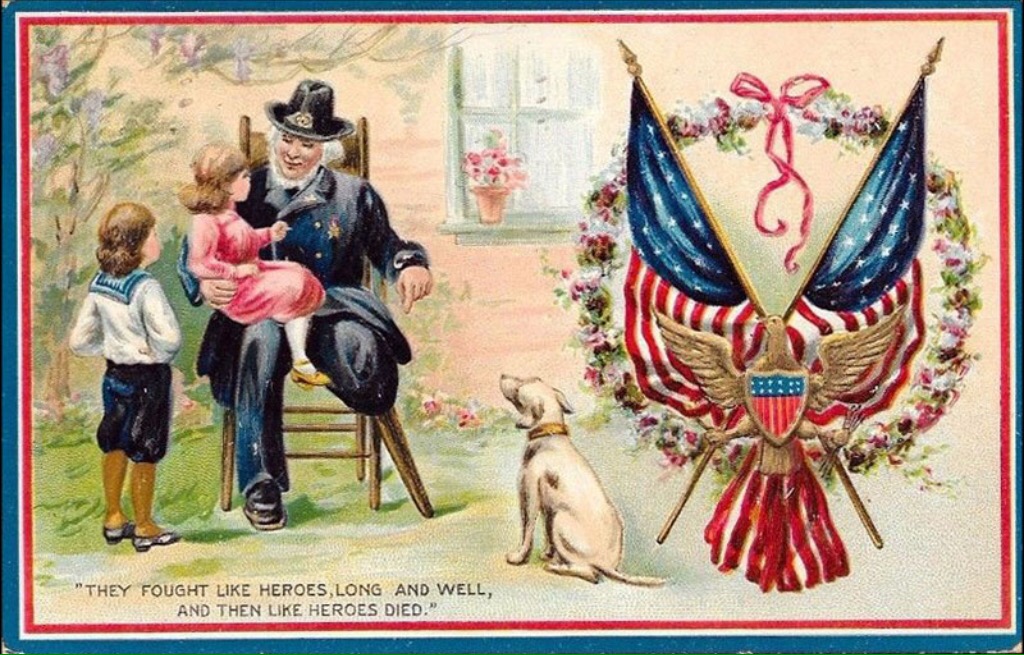
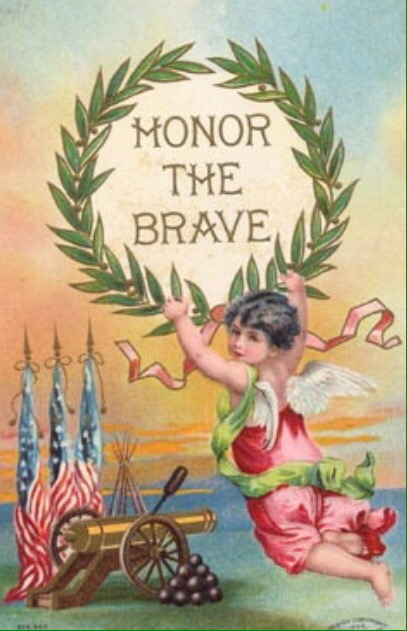
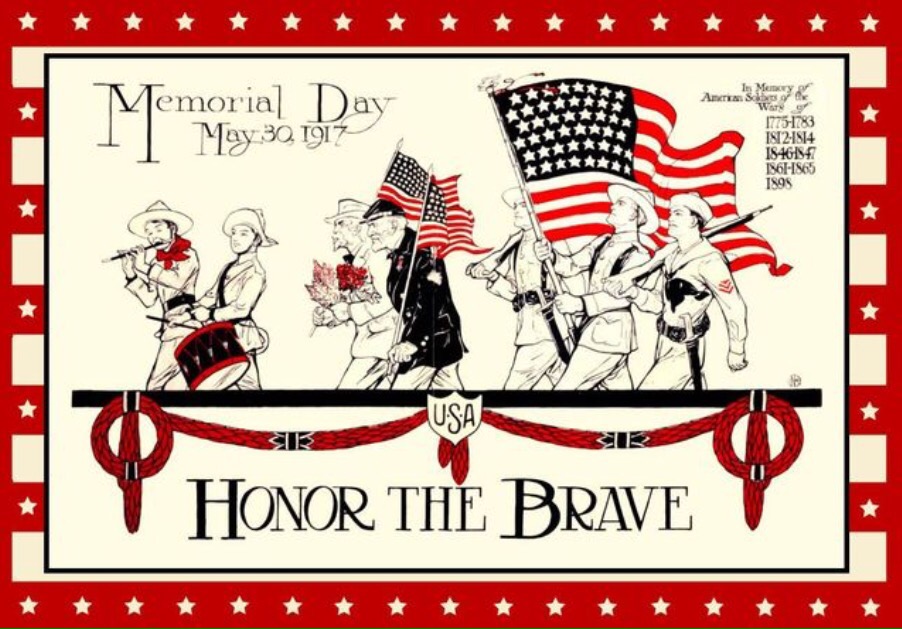
Throughout the history of our country some lovely artwork has been produced in honor of Memorial Day.  I’ve picked some examples, most old, some new.  As you look at these I hope it brings to mind those who have sacrificed their lives so that we can have the freedom we have today.


Carol Fenn 5-2017

Authenticating Old Cast Iron Toys and Banks 

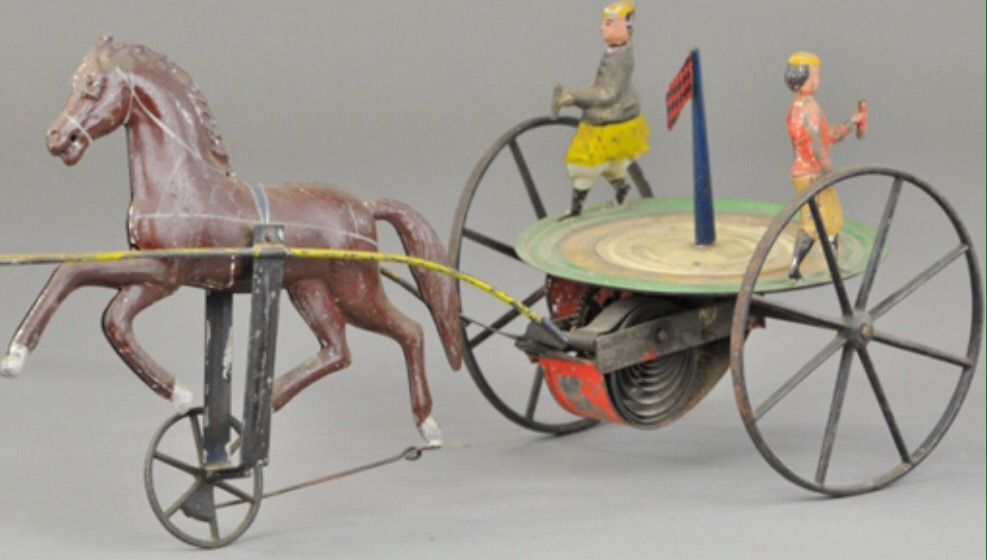
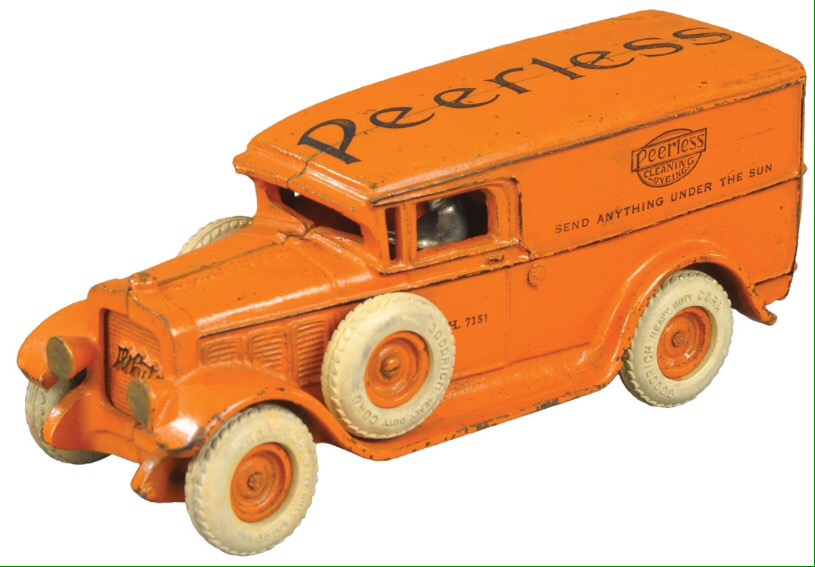
Even though the prices are down on a lot of antiques there are still some things that sell for a lot of money. Cast iron toys and banks are a good example of this. Excellent authentic pieces of cast iron can still sell for several thousand dollars at a good auction. With this in mind, it’s probably a good idea to know how to identify the good stuff! There are five things to look for:

Jonah and The Whale bank sold for $414,000

First, check the alignment. On modern reproductions the mold sections are often not properly aligned before they are locked together.

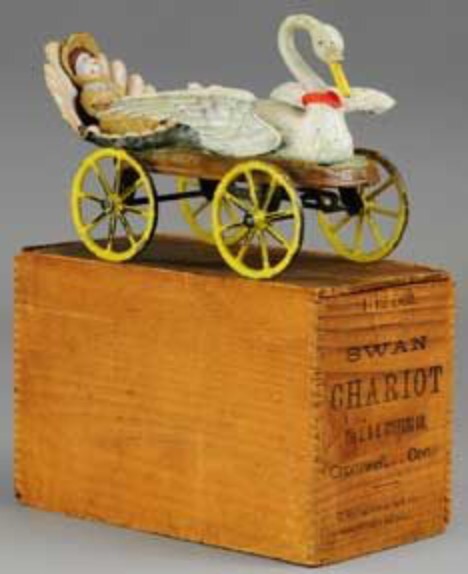
Swan chariot with original box

Second, check the seams. Look at how the separate pieces of cast iron fit together. The seams between pieces on most early cast iron toys are so tight that they might even be hard to find. On the new fakes, there are often large gaps.

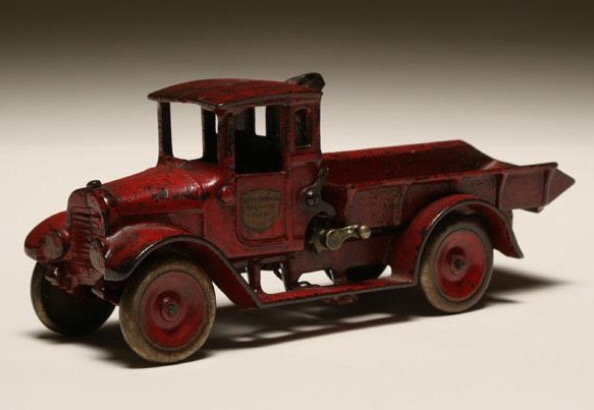
Toy truck sold for more than $21,000

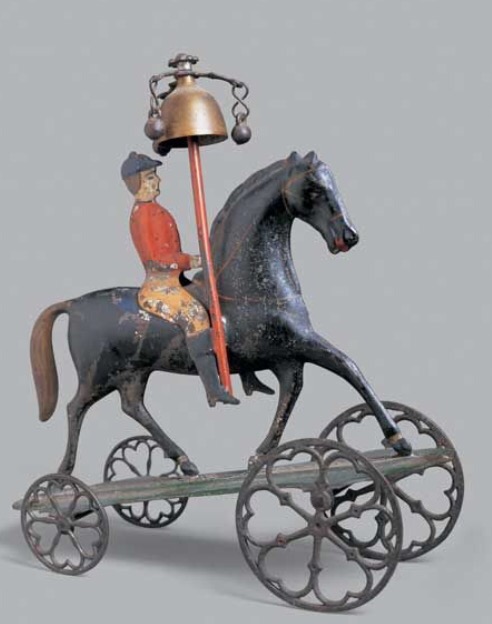
Bell toy

Third, check the surface. In early cast iron, the molds were formed from very fine sand. That light sandy texture can still be felt, but it is very fine and uniform. On newer pieces you will find areas with a coarse surface. 

Foot ball bank with original box

Fourth, look at the paint. Paint is one of the most important points to look at. It’s difficult (but not impossible) to fake the look of old paint. On old pieces the paint is thicker, the color is brighter, the surface is shiny and hard. 

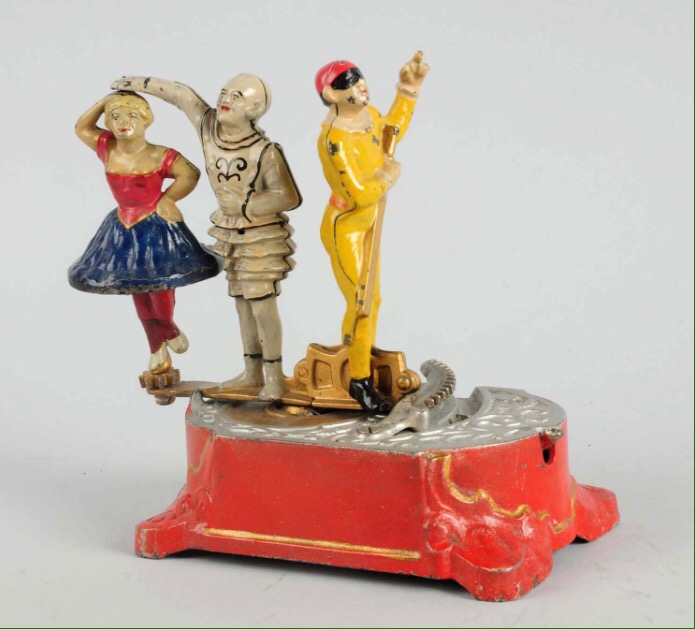
Fantastic example of a cast iron bank

Fifth, look at the bolts. On an old piece the bolts will be so flush to the surface that you almost don’t see them. On a new piece, they will often stick out from the surface. And, if you see Phillips head screws – look no further! That’s a fake!


Carol Fenn 5-2017
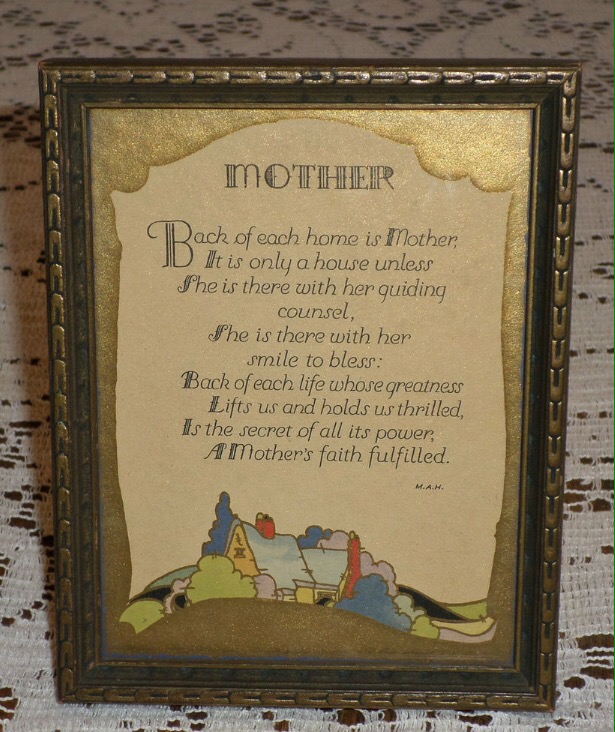
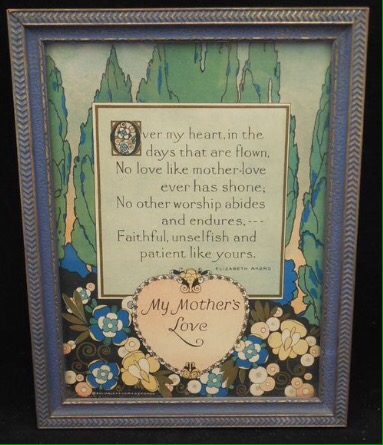
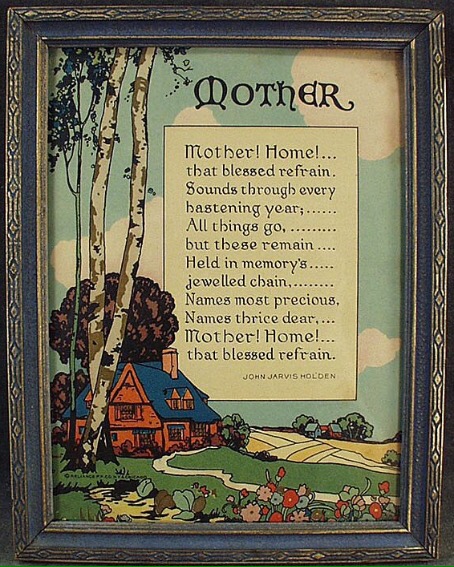
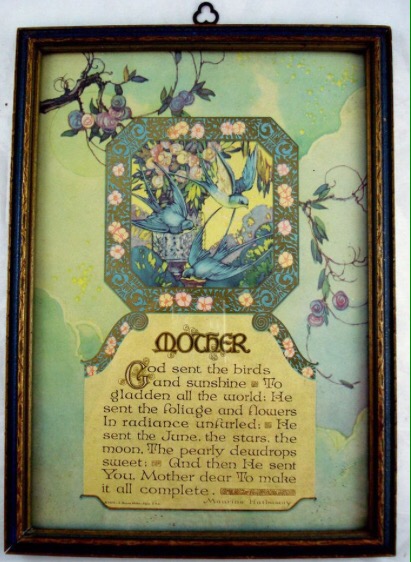
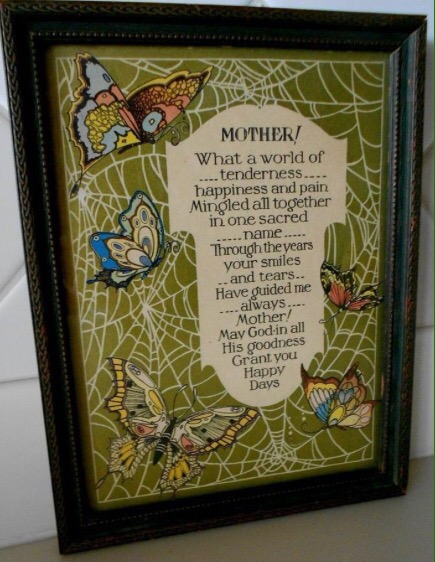
Collecting “Mother” Motto Prints

In the early part of the twentieth century a popular gift was a framed motto print. Usually sentimental, sometimes funny, they were always charming. Some had a strong Art Deco design, others harkened back to the Victorian era. Some of the most popular mottos, then and now, are devoted to mothers.


These mottos are endearing, the text is ornate, the frames are lovely, and they make a stunning collection when grouped together. They can be hung in bathrooms, bedrooms, guest bedrooms, kitchens, really any room in the house. I’ve even seen tiny ones tucked into a Christmas tree.  

There were a few companies who made and sold these mottos. The Buzza company and P.F. Volland are the names you will see most often. 

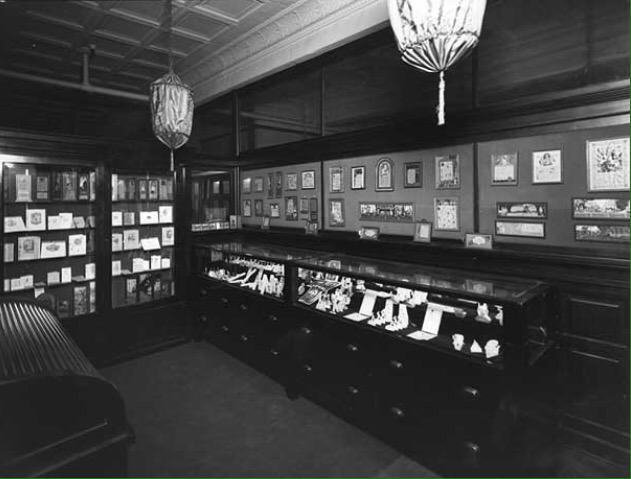
Interior display room at the Buzza company

There is a definite joy and sweetness to motto prints. When I see one it always makes me smile. Some can be emotional and might bring a little tear to your eye but without some sadness, happiness is not as sweet. There are friendship mottos, “going home” mottos, ambition mottos, etc. Mottos devoted to fathers, sisters, brothers, daughters, sons, birds, dogs, etc. But probably the most common is the mother motto.  


You can find motto prints at estate sales, flea markets, yard sales, antique malls and online. Prices vary – generally from $20 – $75, with some going for a couple hundred. But watch out! Once you have one, you will want more!

Carol Fenn 5-2017

Collecting PoP-Up Books!

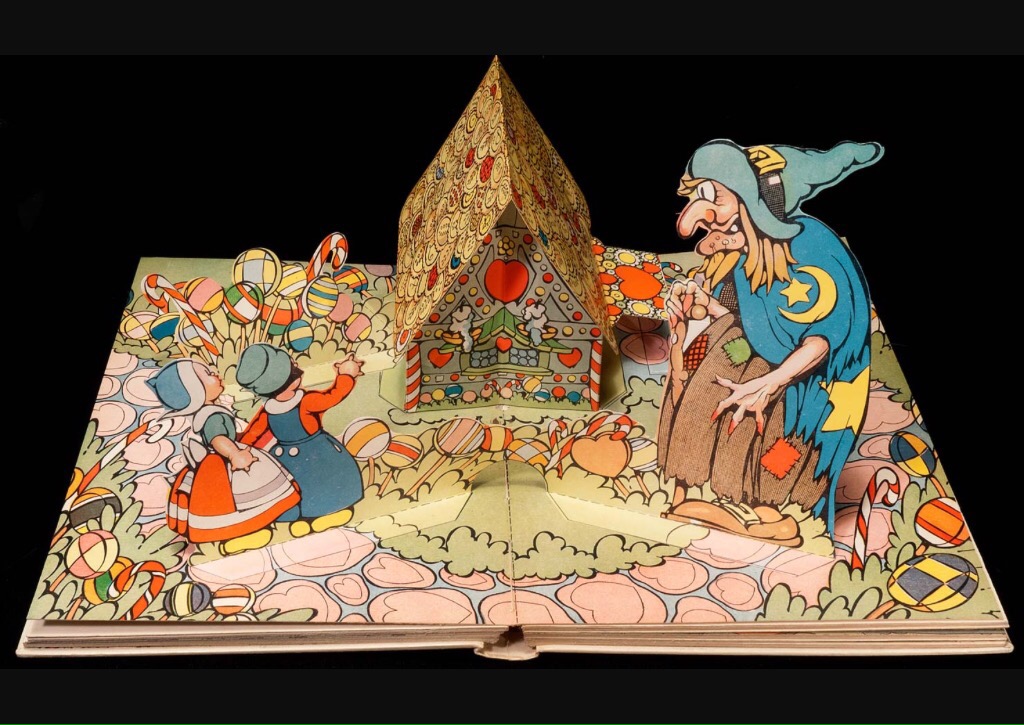
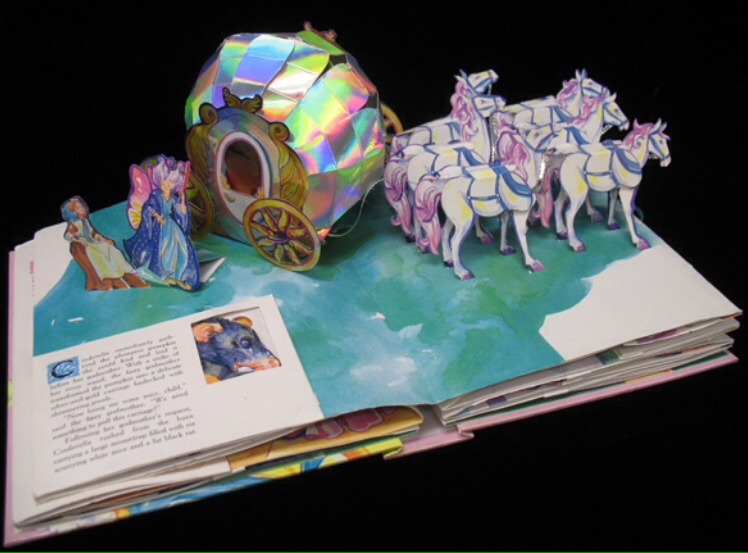
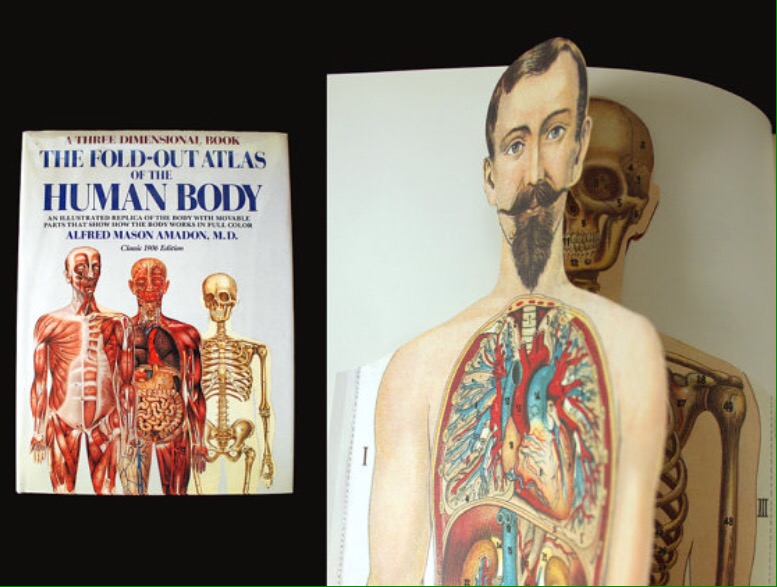
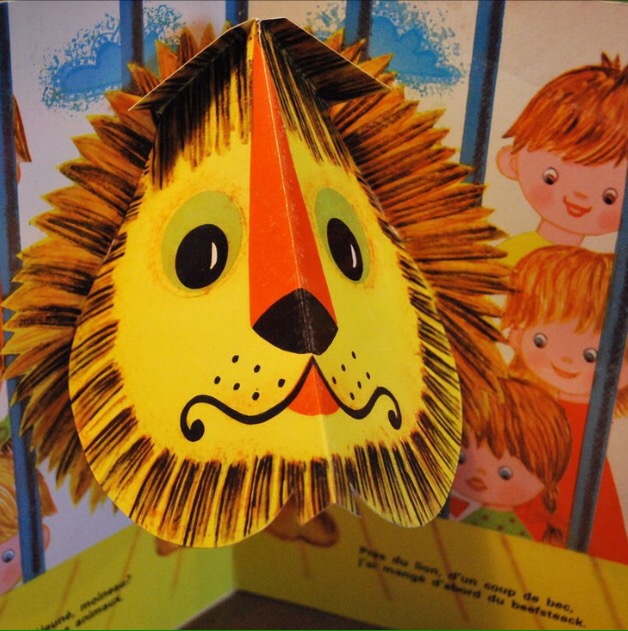
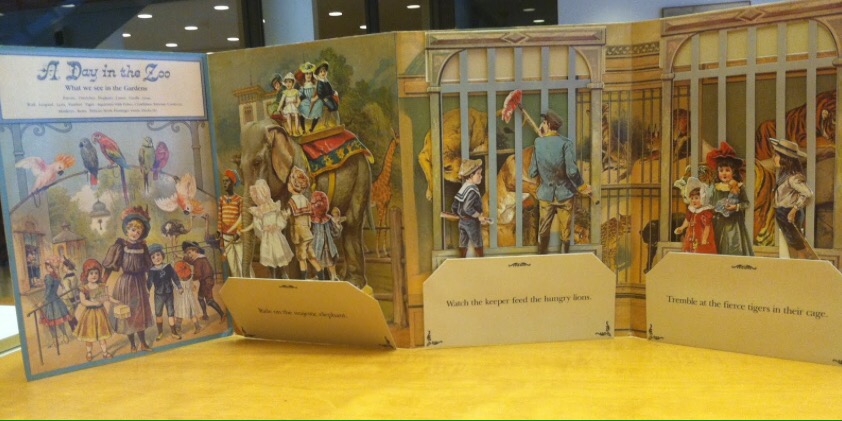
Pop-up books are so cool! From intricate antique versions to intricate versions made today, they are fascinating. Fairy tales, adventure stories, anatomical tomes, they have all been represented in these wonderful books.

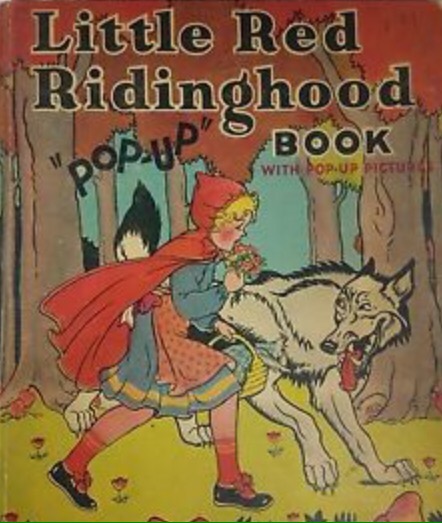
Antique Little Red Riding Hood Pop-Up, 1890


As a child I remember having a pop-up book. As I slowly turned the page there was Little Red Riding Hood (and parts of the forest) magically rising from the page! Then further on, uh oh! The Big Bad Wolf! As an antique dealer I have owned and sold my fair share of wonderful vintage and antique pop-ups. From simple to intricate and amazingly delicate. Today printed book sales are down, with e-books replacing them. However, it is unlikely that this will affect pop-ups. That is because all pop up books are, and always have been, made by hand.


Pop-up books go back to the 13th century, but they became extremely popular in the late 19th century. Today, interest in the field continues to grow and the price paid for rare items is on the rise. In the last few years many have sold in the $250-$350 range. Some rare examples have sold for thousands.

This pop up is in booth #1966 for only $10

Right now in the Midtown Mercantile Merchants Antique Mall at 4443 E. Speedway there is a sweet little pop-up book. It’s in booth # 1966 and it’s only $10. Might be a nice way to start your collection!

Carol Fenn 5-2017
 

Collecting Wedding Cake Toppers

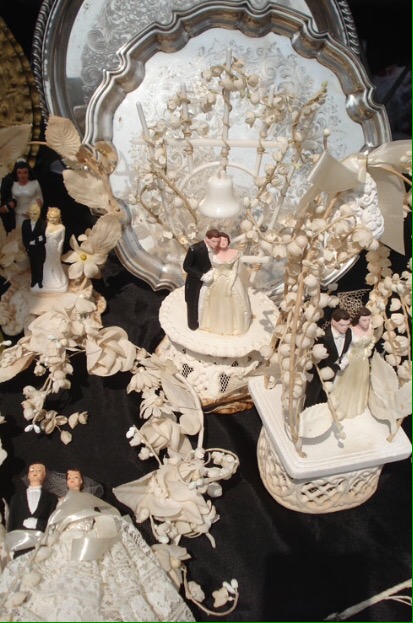
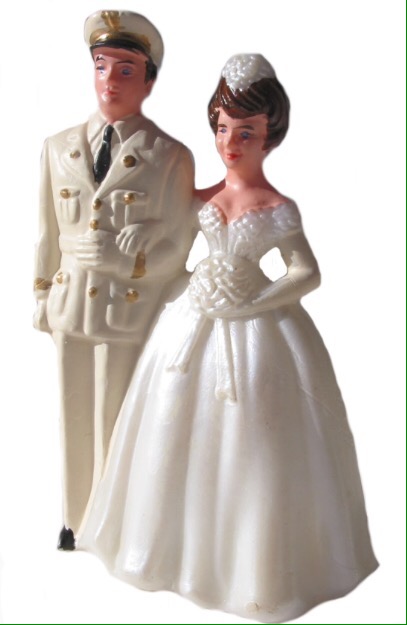
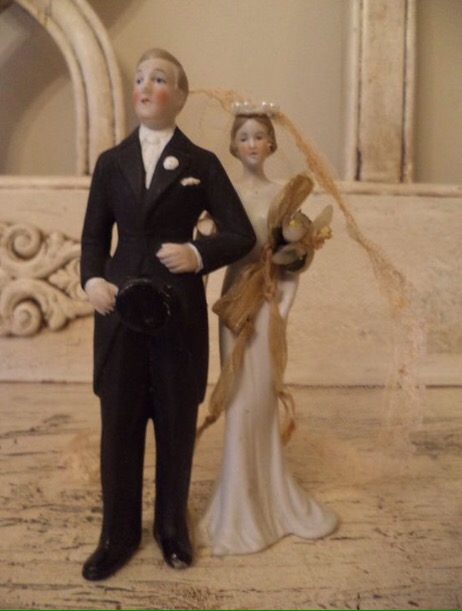
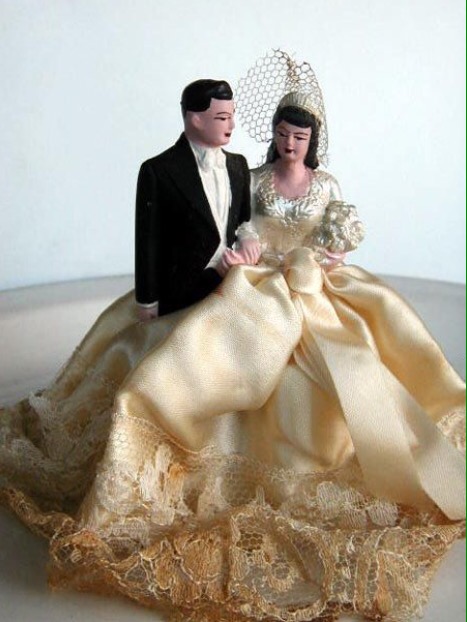
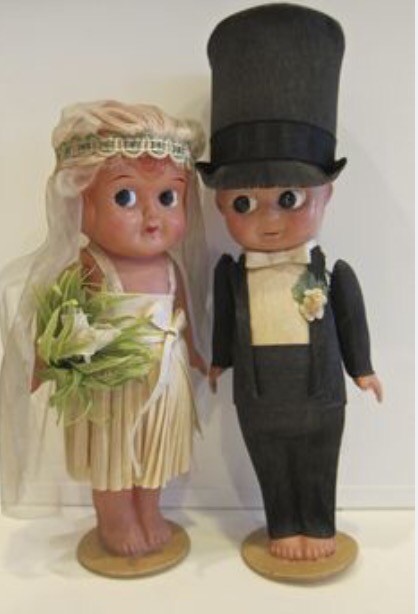
From the 1800’s Victorian era, well into the 1970s, virtually all wedding cakes had a bride and groom topper. In more recent decades, however, floral designs and sculpted icing have, sadly, pushed the little couple off the cake. But lately there’s been a resurgence of interest in old fashioned wedding customs. Hence the re-emergence of two little figures on the top of the cake. And some brides are not using new figures. They like the warmth and whimsy of the vintage ones.  

Contemporary cake with a vintage topper

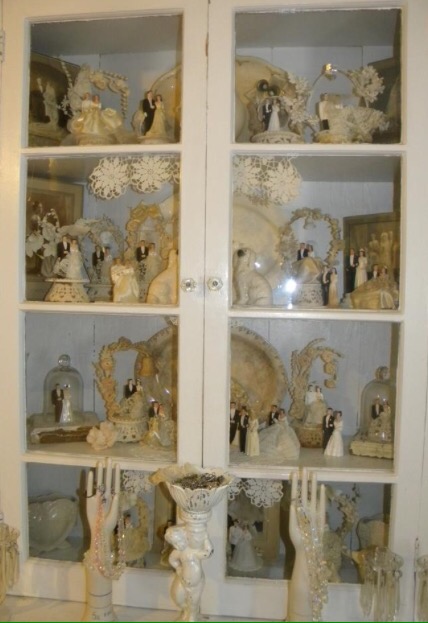
Collectors, too, have fallen under the spell of these whimsical objects. There is an amazingly vast variety of styles, plus they look so charming and festive when grouped together. This is certainly an area of collecting where you can’t stop at just one!


Vintage wedding cake toppers were manufactured in large numbers in Germany, Japan, and the United States. Since most were stored as treasured keepsakes, many survive in good condition. Nineteenth century chalkware toppers are rare and often sell for several hundred dollars each. Mass produced pieces dating to the early to mid 1900s made of bisque, composition, and, later, plastic are the most plentiful. Prices range from $40 to $150. War time designs with soldier grooms start at about $100.


So, if you have a wedding in your future, or if you want to start or add to your collection why not come into the Midtown Mercantile Merchants Antique Mall in central Tucson at 4443 E. Speedway? With almost 100 dealers the search for a wedding cake topper just might be successful!  

Carol Fenn 4-2017
Collecting EASTER Toys

All year long it’s fun to come into the Midtown Mercantile Merchants Mall at 4443 E. Speedway and search for fun, funny, cute, sweet, vintage Easter toys, candy containers, etc. They make a very happy permanent collection in your home. Then when Easter week rolls around you’ve got all these adorable things to make a joyful Easter display!  

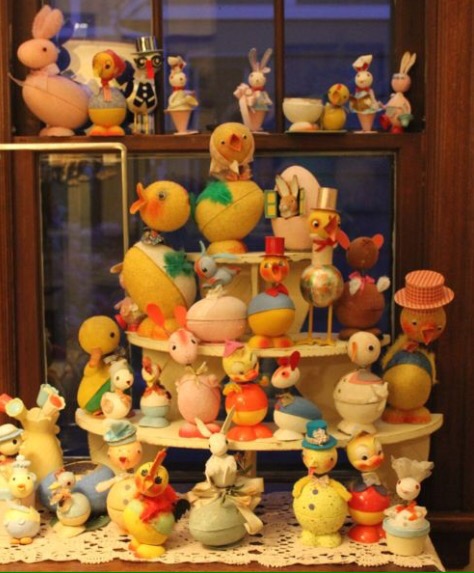
Easter display

Candy containers and nodders

Pop-up bunny!

Don’t forget about the stuffies!

Of all the areas of collecting I think Easter toys and related items might be the most fun. I mean really? How can you not smile at these things?

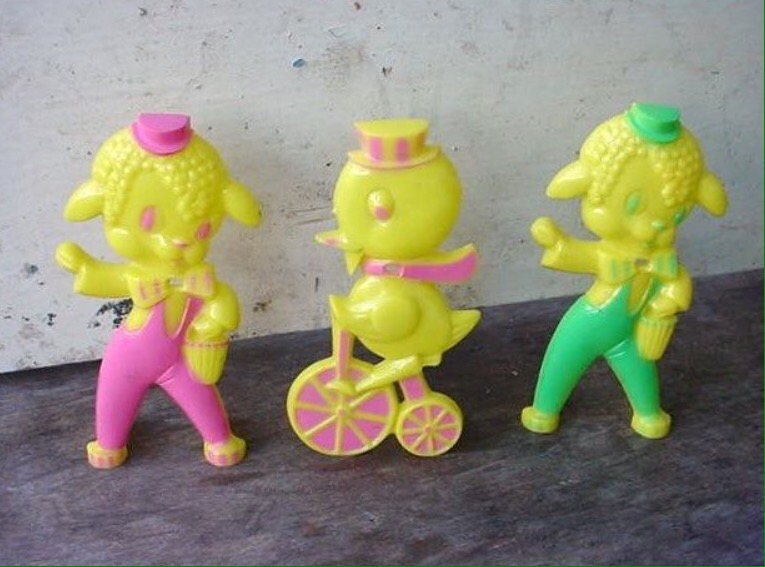
Lollipop holders. So cute!

Don’t forget the lambies

Candy containers

Many of them are made of delicate materials, like cardboard or early celluloid plastic.  These should be handled with care to preserve them for future generations.

Vintage celluloid

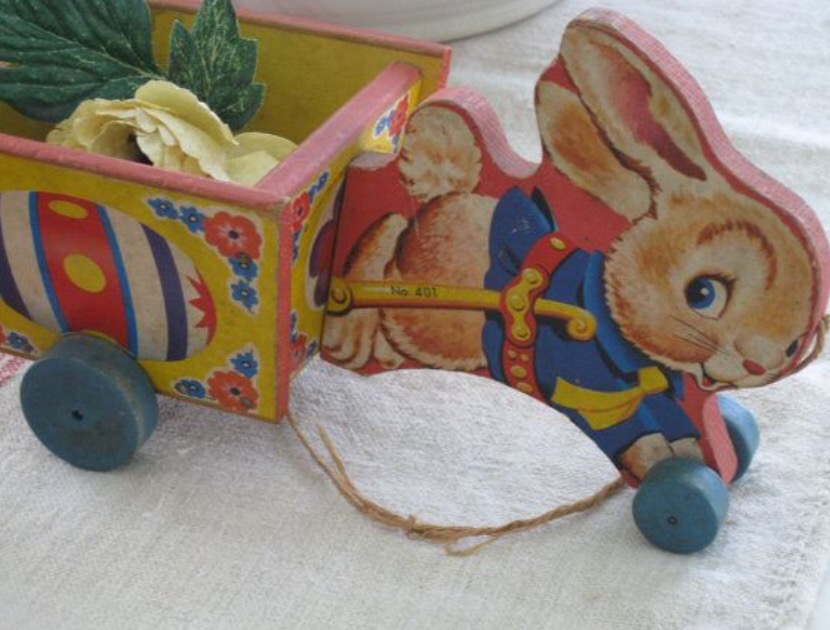
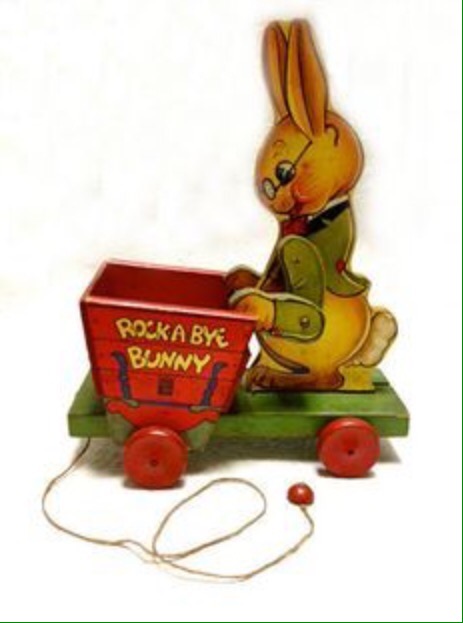
Fisher-Price also made a nice variety of Easter baskets and toys.

One of the Fisher Price toys


Happy Easter and happy hunting!
Carol Fenn 4-2017
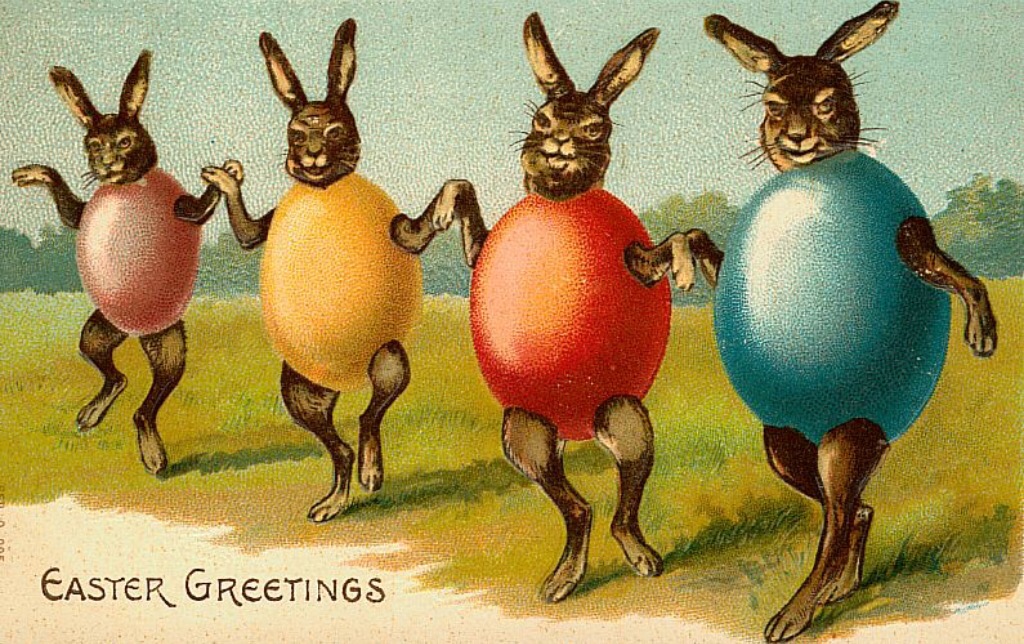
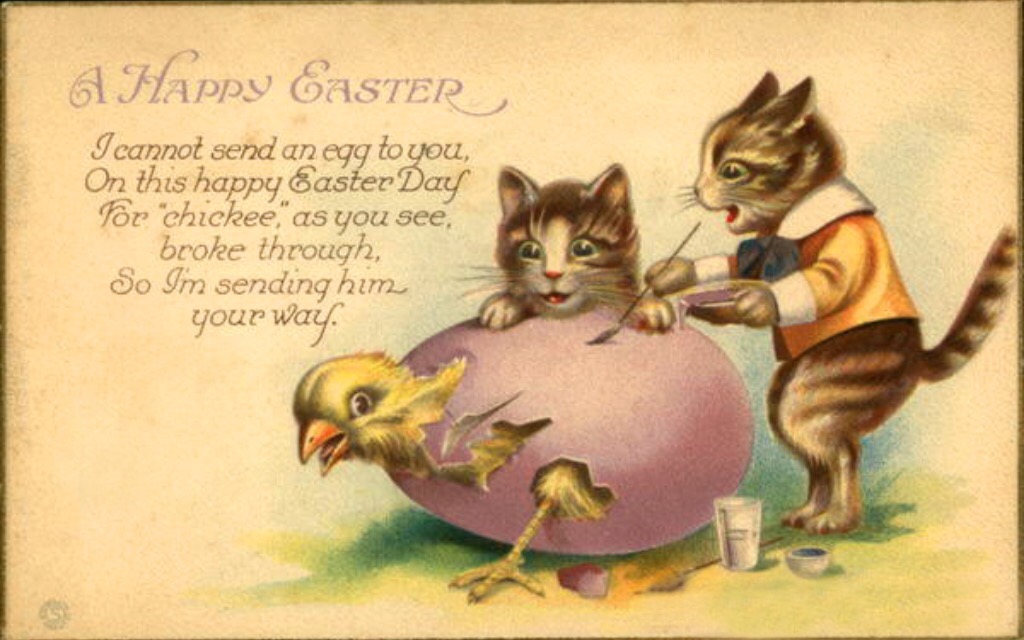
Those CRAZY Weird Victorian EASTER Cards!

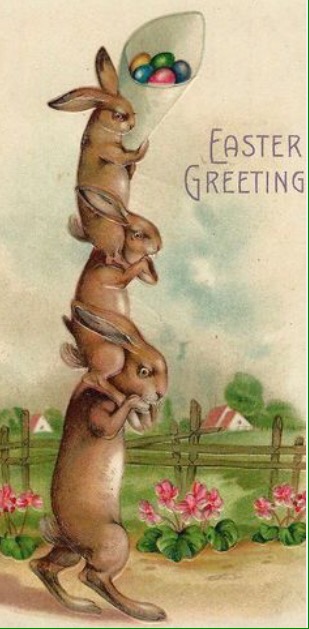
 If you’ve been an antique or vintage dealer, or a collector of old things, you’ve probably had at least a couple old Victorian Easter cards or postcards pass through your hands. I know I have. And some of them have been puzzlingly weird!  

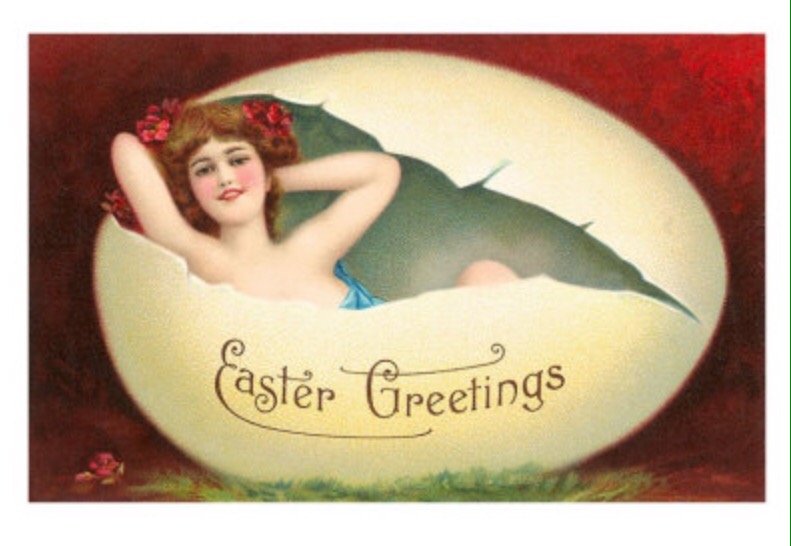
Yep, she’s got a human hand. Half chicken / half human?


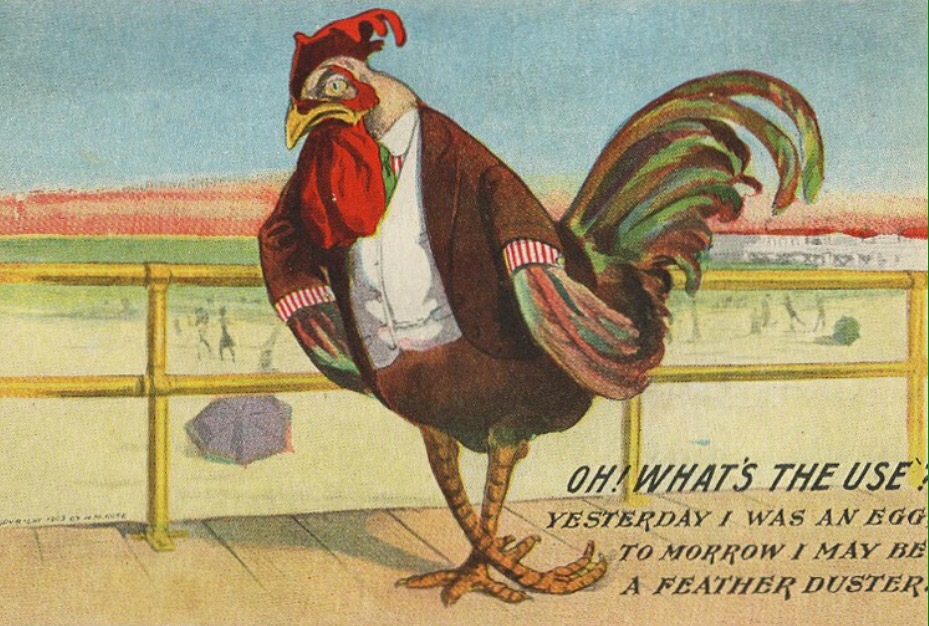
These are so much fun to collect though, because there is so much variety and, well, they can be pretty, charming, crazy, funny, sometimes mean, and very odd. 

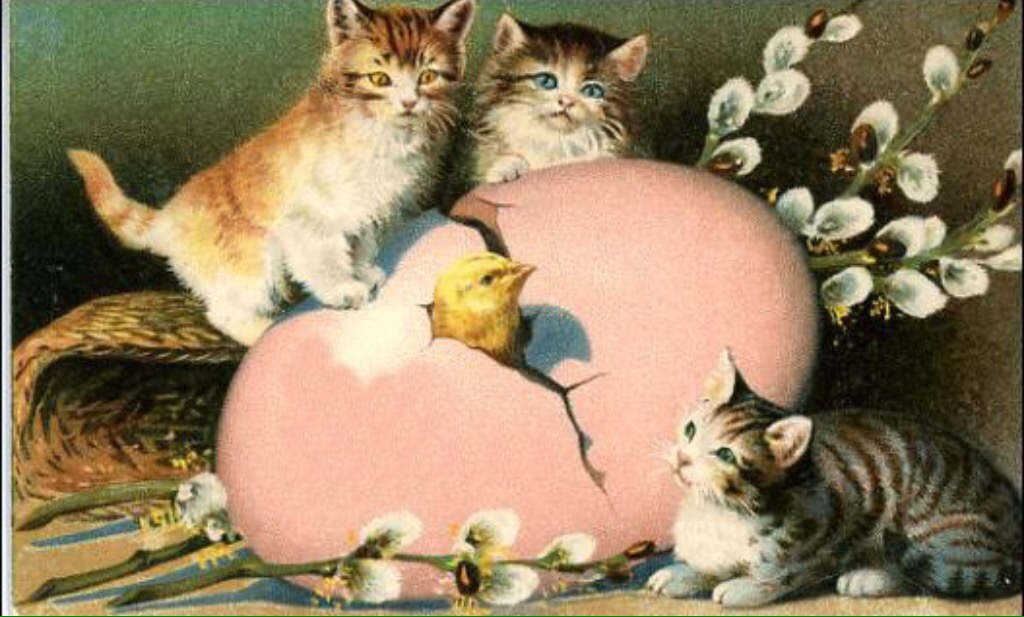
They can be sweet

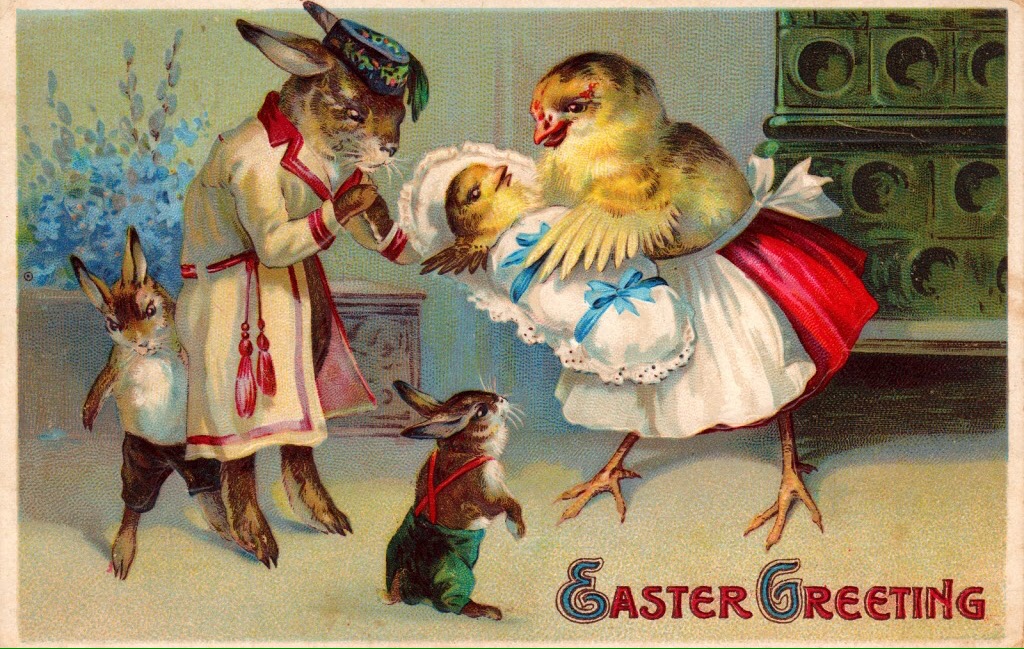
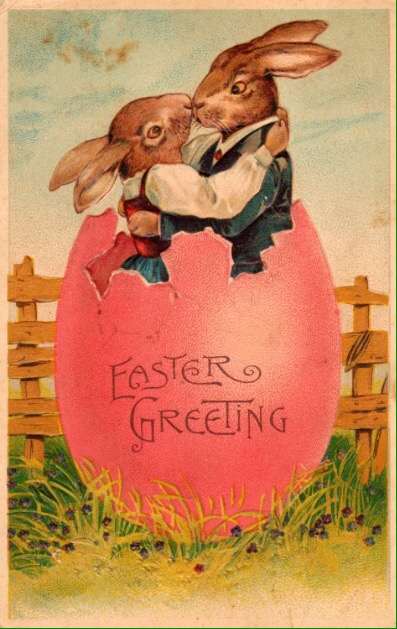
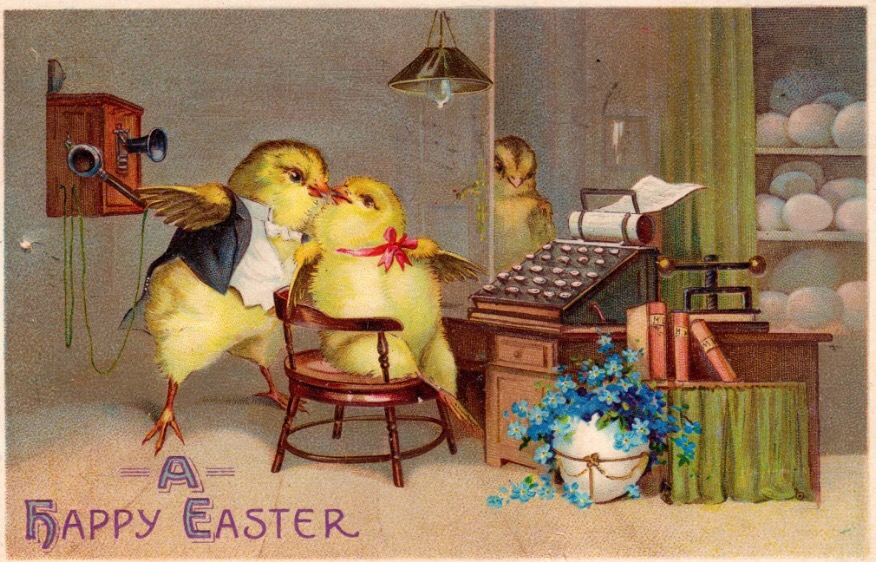
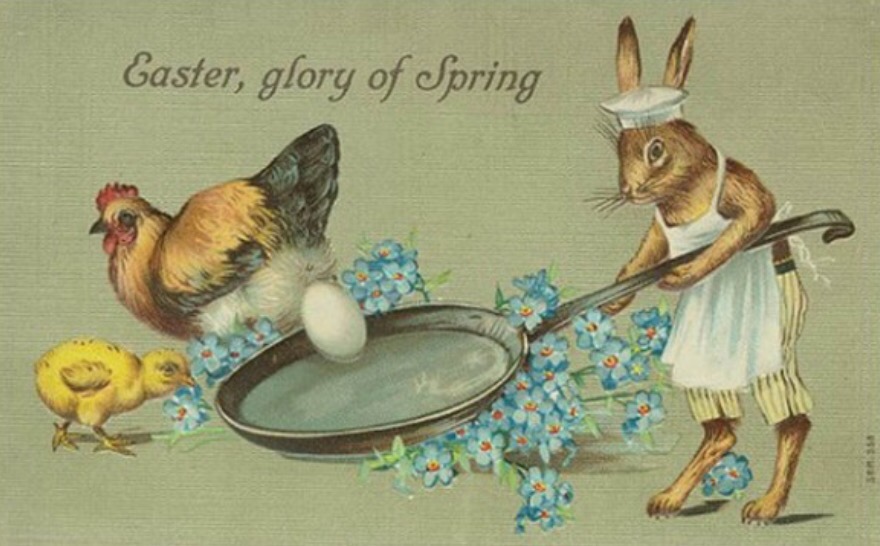
Seems like one of the storylines is Mr. Father Easter Bunny and Mrs. Mother Hen. Now we finally know where Easter eggs come from!

Mr and Mrs Easter Bunny?

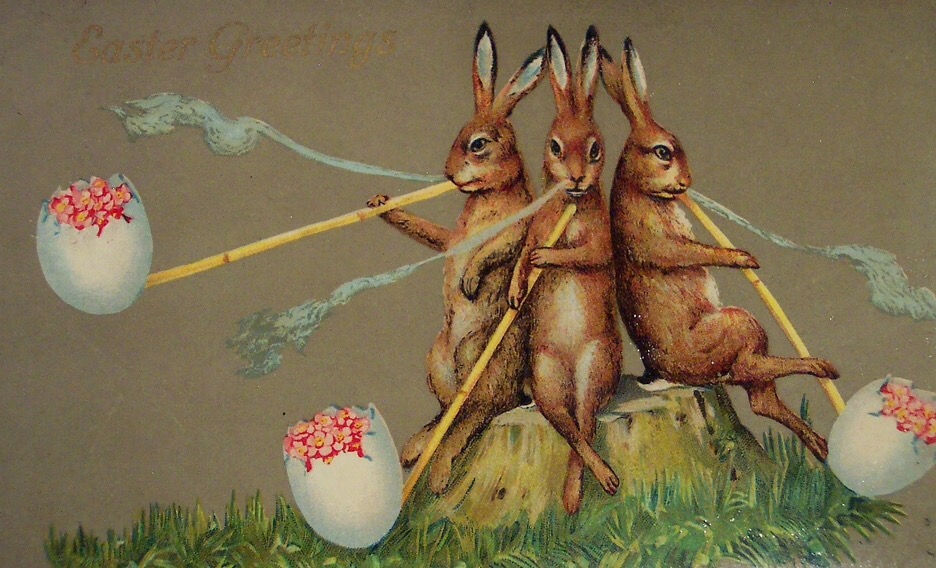
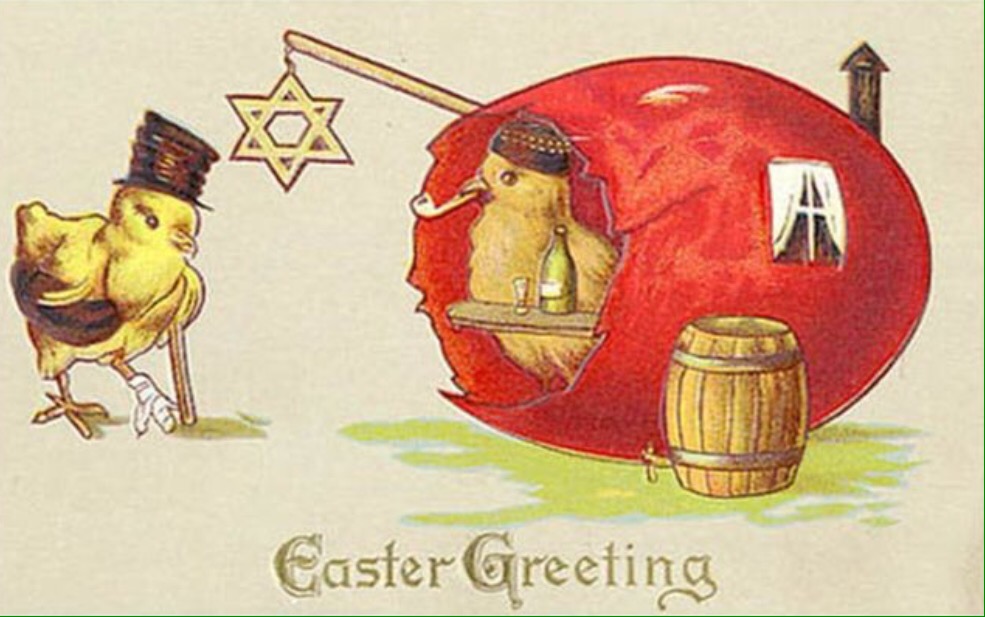
Bunnies, chickens, kissin’, smokin’ … lamenting.


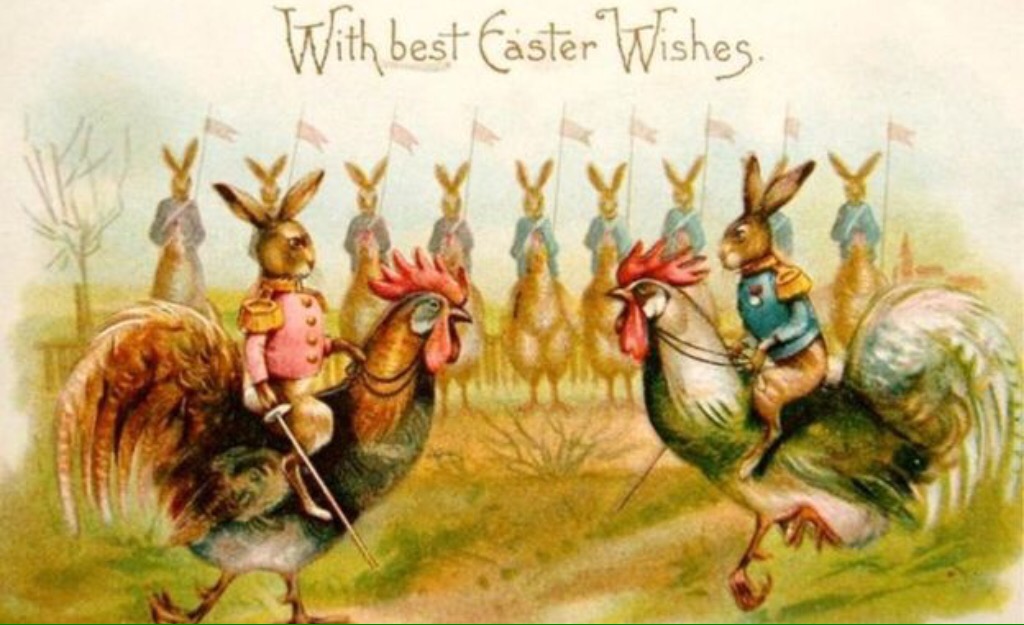
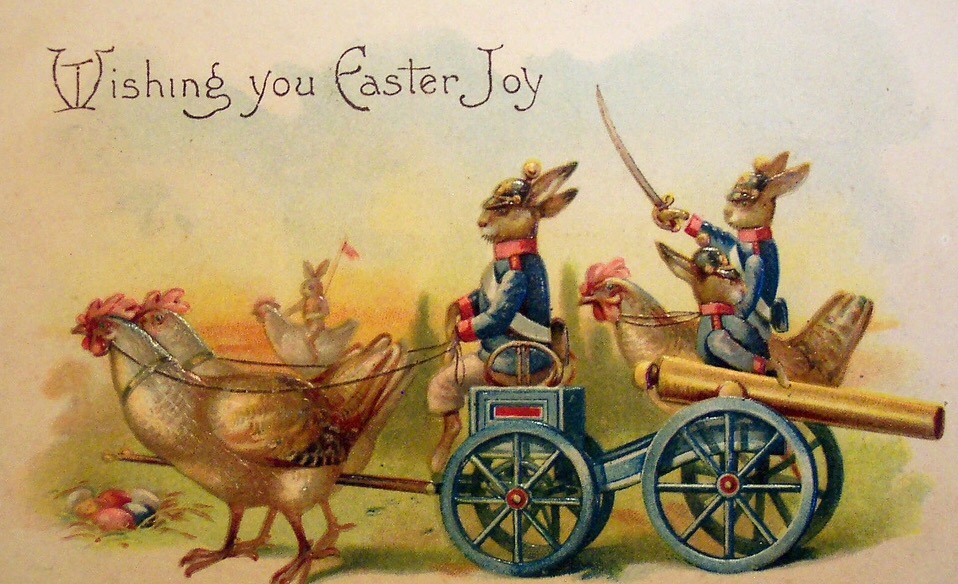
Then we have the military themed cards. Puzzling.  


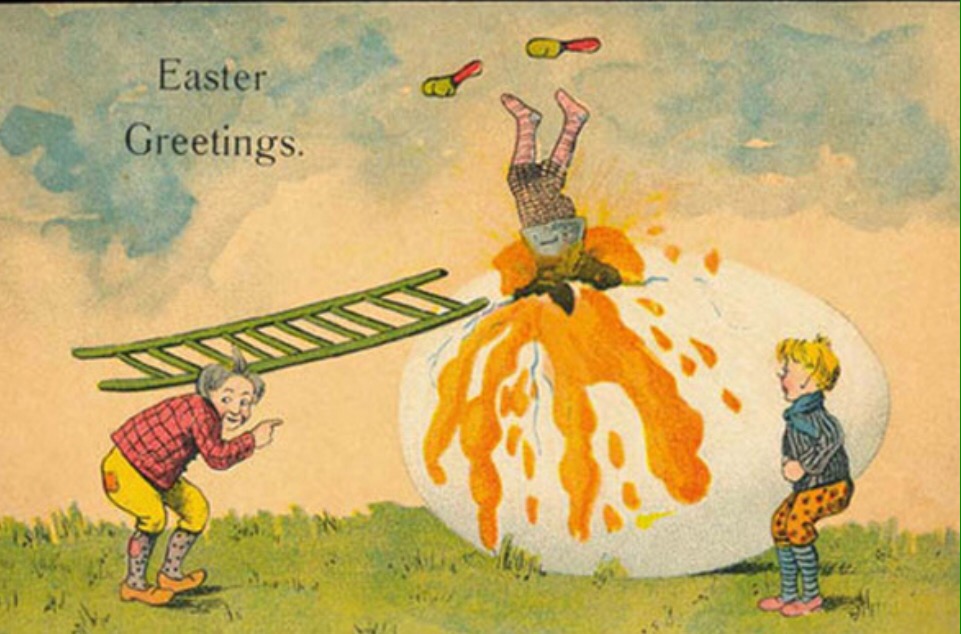
Then this, that, and the other …

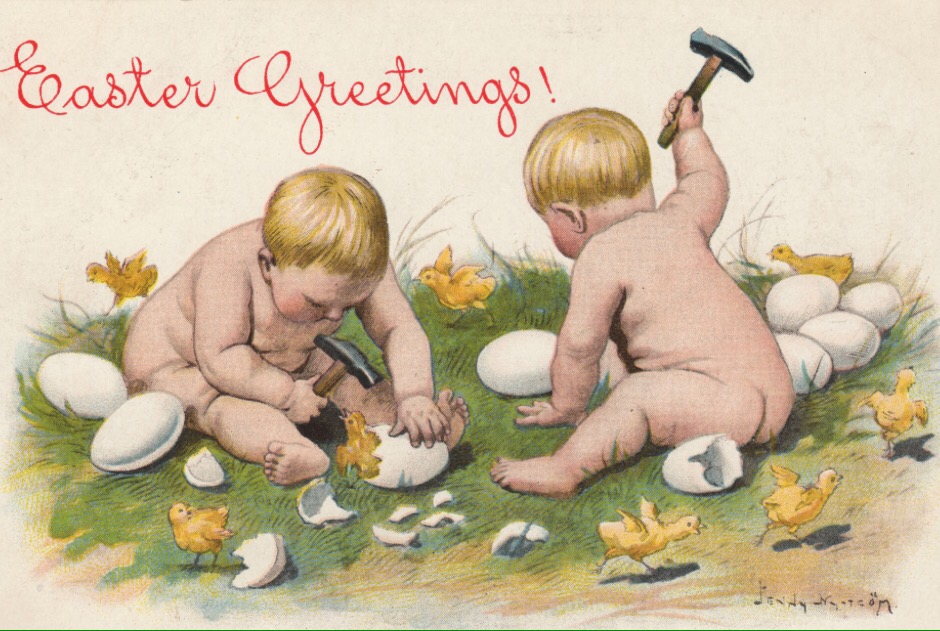
Babies and hammers. Never a good idea.

Uh oh

So, come on in to the Midtown Mercantile Mall at 4443 E. Speedway. We just might have some Easter cards on hand so you can add to your collection or start one!

Carol Fenn 4-2017

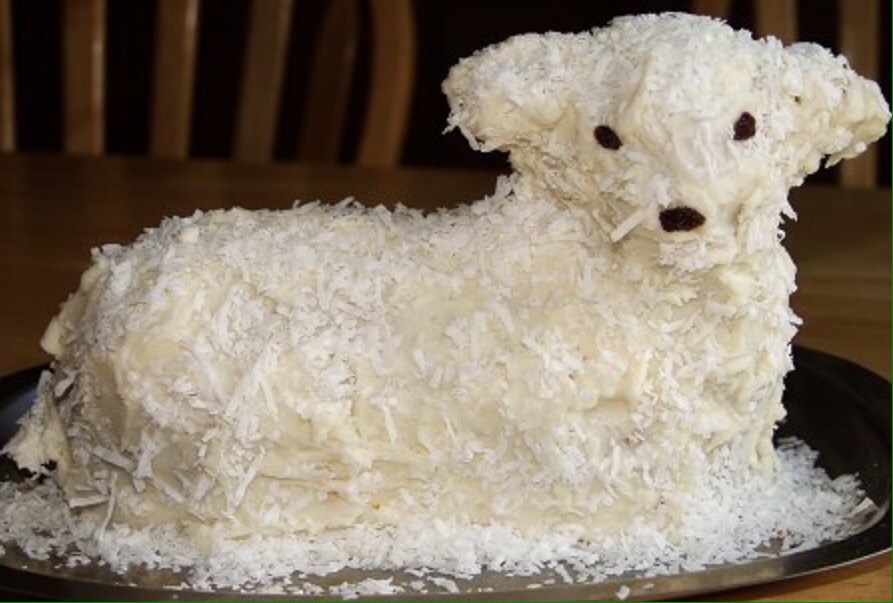
Tips For Baking A VINTAGE Easter Lamb Cake

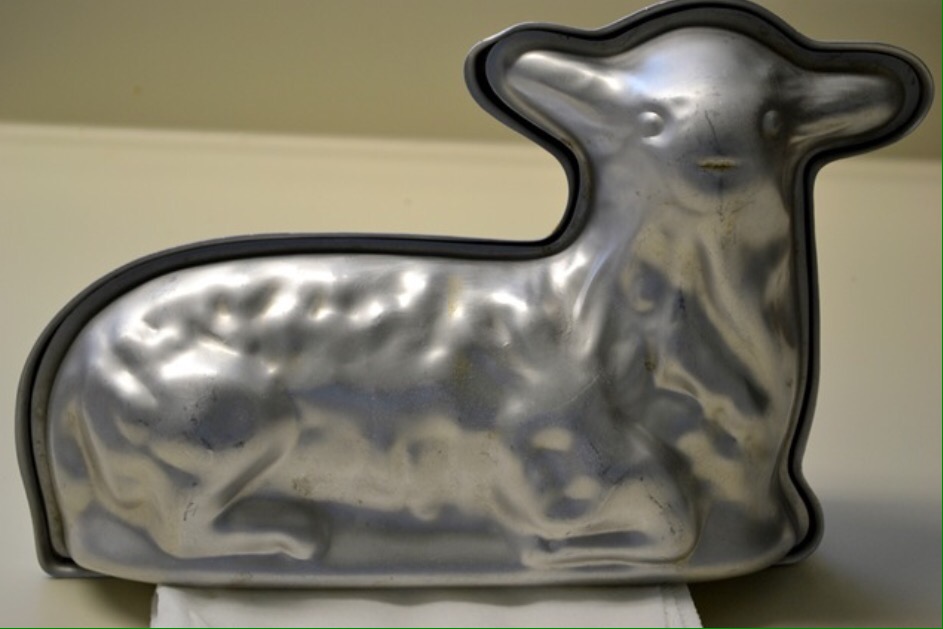
Oh boy, it’s time to make Easter cakes! Come on in to the Midtown Mercantile Merchants Mall at 4443 E. Speedway and you just might find a nice old lambie cake mold. But before you bake your Easter lamb cake there are a few things you need to know. These tips are really helpful and will keep you from having a cute little lamb who’s head falls off (oh no!) …

You could also make a bunny!

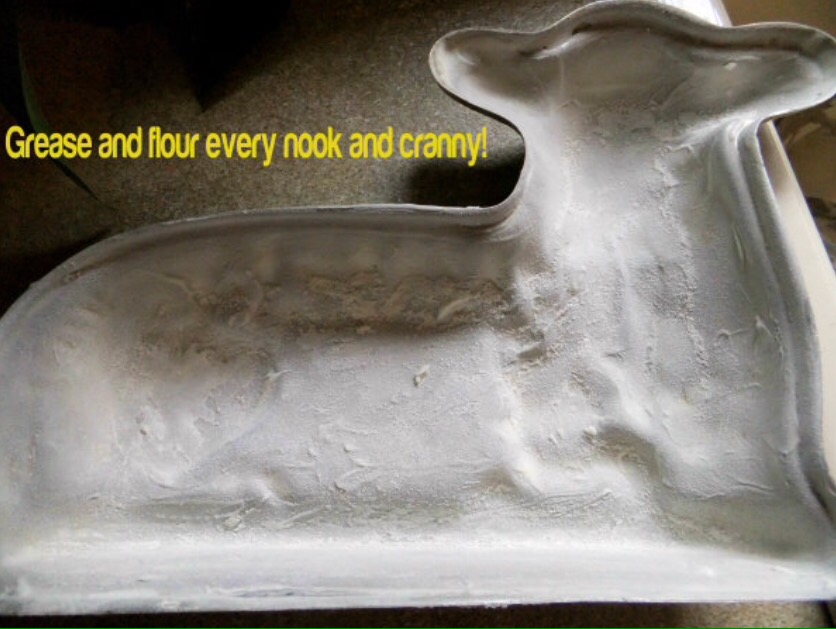
First, coat the interior with shortening. Be sure you get in EVERY little nook and cranny. If you don’t you could have a disastrous crumbling lambie on your hands. Then dust with flour. Same thing. Every nook. Every cranny.

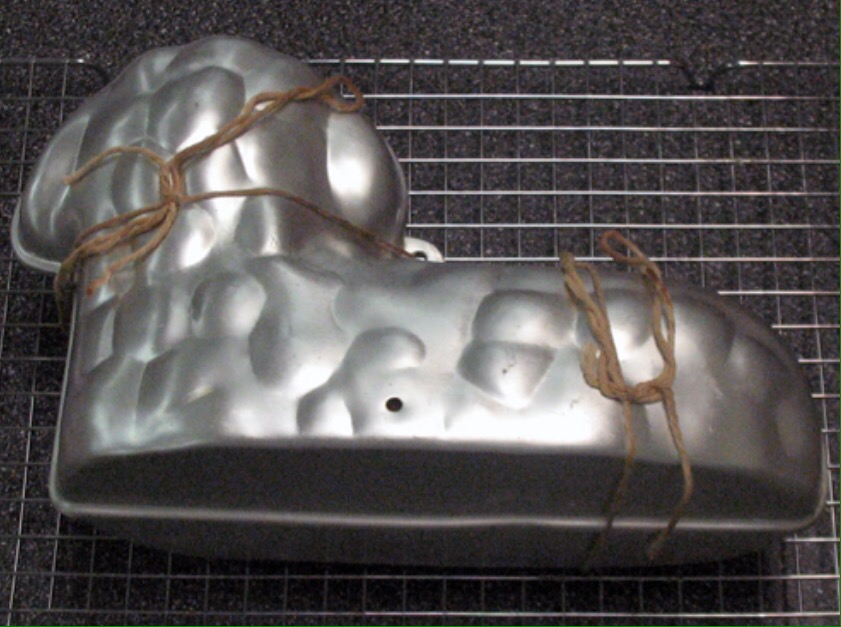
Use your favorite cake batter recipe. Place the side of the cake pan with the lamb’s face – face side down on a cookie sheet. This is the part you will pour the batter into. Pour the batter a little bit short of the rim. Be sure to spread batter gently into the ear cavities to ensure that your lamb actually ends up with ears. Lambs without ears just don’t look right now do they?

Now comes the part to keep the lambs head from rolling off, which is never a pretty site. Place one toothpick in each ear and a thick bamboo skewer in the neck. The skewer should be placed about 1 inch in from the top of the head and extend into the body. Poke these down slightly into the cake batter and make sure they are covered with batter.

Now place the other half of the mold in place and then tie it shut securely with bakers twine. This allows the cake to rise securely into the second half. 

 Cook your cake the maximum amount of time that the recipe calls for. Let it cool appropriately and then get on with the frosting and decorating …

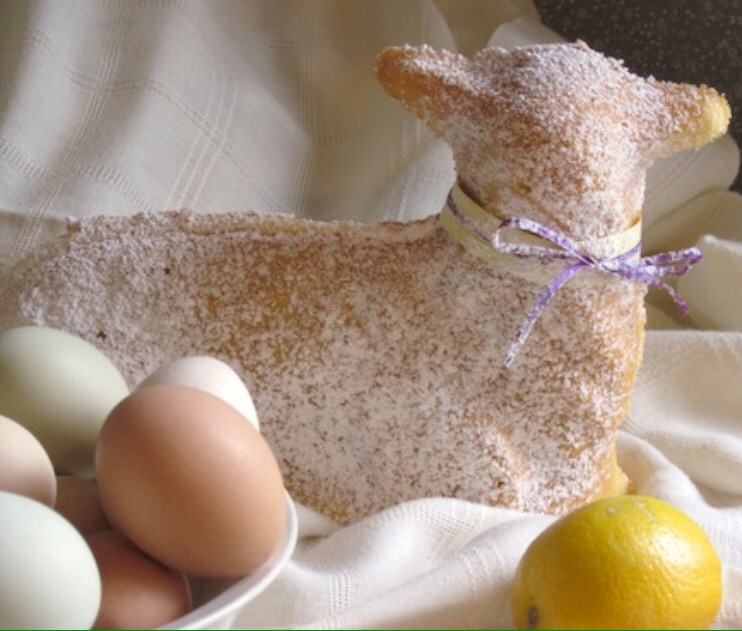
… and if you’re a little nervous about the task of frosting your delicate little lamb you could use a simple glaze or dust with powdered sugar. Happy Springtime!


Carol Fenn 4-2017